

Astronomers have, for the first time, managed to map in detail one of the largest galaxy clusters in the universe, a gigantic structure that remained virtually invisible for decades because of a special region of our galaxy
Called the Vela Supercluster, this enormous cosmic formation now reveals its true impressive size and earns a place among the largest known structures in the cosmos.
It all began in 2016, when the supercluster was discovered.
It is located about 800 million light-years from Earth, but is hidden precisely behind the so-called “Zone of Avoidance” of the Milky Way.
This zone is a band of the sky that covers up to 20% of the night view and is blocked by the dense disk of our own galaxy, full of stars, dust, and gas.
This barrier makes it almost impossible to observe what lies on the other side using ordinary visible light telescopes.
Therefore, for years, Vela remained a mystery, its true extent unknown.
Now, a new study published in March 2026 has changed that.
Researchers used a clever combination of old data and new observations to map its structure.
They analyzed more than 65,000 measurements of galaxy distances and added about 8,000 new redshift observations – a method that measures how much the light from galaxies has been stretched by the expansion of the universe, revealing their speed and position.
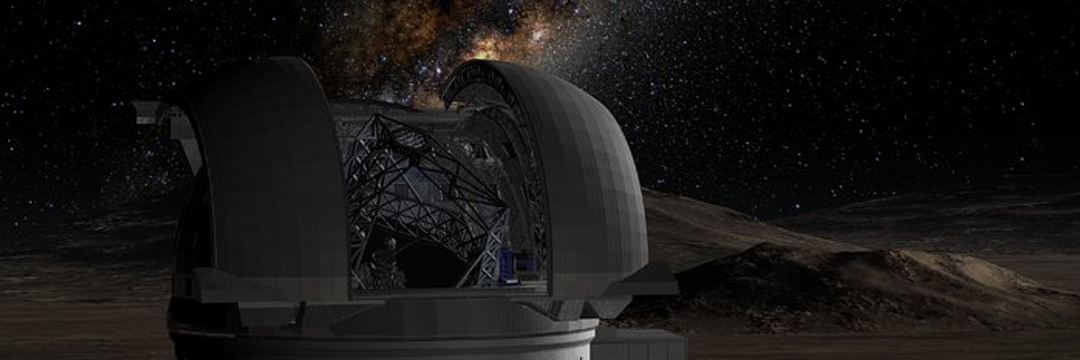
The highlight was about 2,000 measurements made by the MeerKAT telescope in South Africa.
This instrument captures radio waves from the hydrogen clouds within galaxies, managing to “see” through the dust of the Milky Way where ordinary light cannot pass.
The results are impressive.
The Vela Supercluster is about 300 million light-years in diameter – about 3,000 times the width of the Milky Way.
It contains matter equivalent to about 30 quadrillion suns and is formed by at least 20 galaxy clusters, each with hundreds or thousands of galaxies bound by gravity.
The mass is concentrated mainly in two central cores that move towards each other.
Scientists were thrilled to confirm that it is a cohesive and gigantic structure, comparable to the largest known in the nearby universe.
To give an idea of “”its size, Vela is more massive than the Lani?kea supercluster – the one that includes our Milky Way and Earth – and is just behind the famous Shapley Supercluster, considered one of the largest.
Other even larger structures exist, such as the Great Wall of Hercules-Coroa Borealis, but they are formed by several superclusters joined together.
Researchers, led by experts like Renee Kraan-Korteweg from the University of Cape Town, have given the structure a new, affectionate name: Vela-Banzi.
In the Xhosa language, spoken by indigenous peoples of South Africa, this means something like “revealing widely,” in homage to the telescopes used in the study and the discovery that finally shed light on what was hidden.
This achievement is not just an astronomical curiosity.
Understanding the size and movement of these giant structures helps scientists test and refine models of the universe, confirming how matter is organized on cosmic scales.
In the future, even more powerful radio telescopes should allow for even more precise maps.
Even so, part of Vela will likely remain somewhat veiled, as not all galaxies have large clouds of hydrogen visible in radio waves.
What seemed like a dark void behind our galaxy now reveals itself as one of the titans of the cosmos.
This discovery shows how technology and scientific persistence can overcome the natural barriers of space, opening a new window to better understand our place in the vast universe.
The sky, which already seemed full of secrets, has just revealed yet another of its hidden giants.
Published in 04/28/2026 02h05
Text adapted by AI (Grok) and translated via Google API in the English version. Images from public image libraries or credits in the caption. Information about DOI, author and institution can be found in the body of the article.
Reference article: