

doi.org/10.1038/s41550-026-02842-5
Credibility: 989
#Supernova
Astronomers have found a smarter and more powerful way to study the Universe using supernovae, those impressive explosions of stars
An international team led by scientists from the Institute of Cosmos Sciences at the University of Barcelona (ICCUB) has developed a new method that can extract much more information from these cosmic events, helping to better understand how the Universe expands and what the mysterious dark energy is.
Type Ia supernovae occur when white dwarfs, which are already dead and compact stars, accumulate material and explode violently.
These explosions almost always have a similar brightness, allowing scientists to treat them as “standard candles.” By comparing the expected actual brightness with what we observe from Earth, it is possible to calculate enormous distances in space.
This method was fundamental in discovering that the expansion of the Universe is accelerating, a phenomenon linked to dark energy, one of the greatest enigmas of current physics.
However, not all supernovae are exactly the same.
Over the past 20 years, researchers have realized that the brightness of supernova explosions is influenced by the environment: older or more massive galaxies can make the explosions appear slightly different from those occurring in younger or smaller galaxies.
Until now, corrections for these effects were relatively simple and approximate, which limited the precision of cosmic measurements.
The new framework, called CIGaRS, changes this completely.
Instead of analyzing each factor in isolation, it creates a single, consistent model that unites several elements: the supernova explosions themselves, the galaxies that host them, the interstellar dust that darkens and reddens the light, the frequency with which these explosions occur throughout the history of the Universe, and cosmic expansion itself.
All of this is connected by physical and statistical relationships.
To make this possible, scientists use a modern approach called simulation-based inference, combined with artificial intelligence.
They create thousands of simulated universes on the computer, based on physical models.
A neural network (a type of AI) learns the connections between what is observed and the real parameters of the Universe.
After being trained, this AI can efficiently analyze real data, processing tens of thousands of supernovae simultaneously – something impossible with traditional methods.
One of the most important results is the ability to measure precise distances (the so-called redshift) using only images, without needing expensive and time-consuming spectroscopic observations.
Redshift shows how much the light from galaxies has been stretched by the expansion of the Universe, revealing both the distance and the time we are looking into the past.
This precision approaches that obtained with spectra, which is a great advantage.
This paves the way for the near future of astronomy.
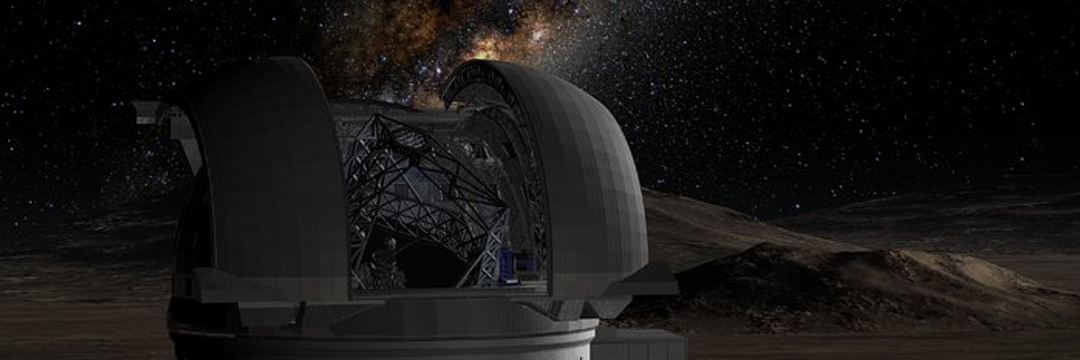
The Vera C.
Rubin Observatory, under construction in Chile, will conduct a 10-year survey of the sky and detect a huge number of supernovae.
Almost 99% of them will be observed only through images in different colors (photometry), without spectroscopic follow-up.
CIGaRS was designed precisely to make the most of this gigantic volume of data, avoiding simplifications that can introduce errors.
In addition to refining dark energy measurements, the method helps to better understand how and when Type Ia supernovae form.
By reconstructing explosion rates as a function of the age of stars in galaxies, researchers can investigate long-standing questions about the stellar systems responsible for these explosions.
The authors estimate that this approach can improve cosmological constraints by up to four times compared to current methods, which rely on a smaller number of supernovae with spectroscopic data.
Combining detailed physical modeling with artificial intelligence resolves important weaknesses in today’s cosmological analyses.
With tools like CIGaRS, scientists will be better prepared to interpret the revolutionary data that the Rubin Observatory will bring, advancing our knowledge of the structure, evolution, and deepest mysteries of the Universe.
This is an exciting step that makes cosmology more precise and accessible from observations that will soon be within our reach.
Published in 05/31/2026 18h23
Text adapted by AI (Grok) and translated via Google API in the English version. Images from public image libraries or credits in the caption. Information about DOI, author and institution can be found in the body of the article.
Reference article:
Original study: