


doi.org/10.1093/mnras/staf1854
Credibility: 989
#Milky Way
For decades, astronomers have believed that at the center of our galaxy, the Milky Way, lies a supermassive black hole called Sagittarius A”, with a mass equivalent to about four million times that of the Sun
This conclusion comes from impressive observations: stars orbiting at extremely high speeds around an invisible point, the bright ring captured by the Event Horizon Telescope, and gravitational behavior that only an extremely compact and massive object could explain.
But a new study, recently published in the journal “Monthly Notices of the Royal Astronomical Society,” proposes a bold and intriguing idea: what if what lies at the heart of the galaxy is not a black hole, but a dense clump of dark matter? Dark matter is that mysterious substance that neither emits nor absorbs light, but influences gravity on gigantic scales, accounting for about 85% of the total mass of the universe.
The researchers, led by scientists such as Valentina Crespi and Carlos Argüelles, from the Institute of Astrophysics of La Plata, Argentina, suggest that a specific form of matter…
Dark matter, composed of light particles called fermions, could accumulate at the center of the galaxy, forming an ultra-dense and stable core.
This core would have a peculiar structure: a very compact core in the middle, surrounded by a more diffuse halo that extends throughout the galaxy.
What makes this hypothesis fascinating is that it manages to explain, at the same time, two phenomena observed in the Milky Way.
Near the center, stars called S-stars rotate in tight orbits and at extreme speeds, as if pulled by something with immense and concentrated gravity-something a black hole would do perfectly, but which this dark matter core could also mimic.
At the same time, in the outer regions of the galaxy, the rotation of stars and gas follows a pattern that suggests the presence of scattered dark matter, and the model predicts exactly that, with the same material forming both the central core and the galactic halo.
The authors emphasize that it is not simply a matter of replacing a black hole with an invisible dark object.
They propose something more unified: the central supermassive object and the dark matter halo of the galaxy would be manifestations…
different from the same continuous substance.
This creates a structure with a dense core and a more elongated halo, unlike traditional models of cold dark matter, which predict more diffuse halos with extended tails.
Furthermore, the model aligns surprisingly well with the image from the Sagittarius A? Event Horizon Telescope, which shows a central shadow surrounded by a ring of light-something that, according to the researchers, could be produced by this compact cluster of dark matter, without needing a typical black hole event horizon.
Of course, this idea is still speculative and faces challenges.
The scientific community widely accepts the existence of supermassive black holes in galactic centers, with accumulated evidence from several galaxies, including our own.
Alternative models need very strong evidence to replace the current consensus.
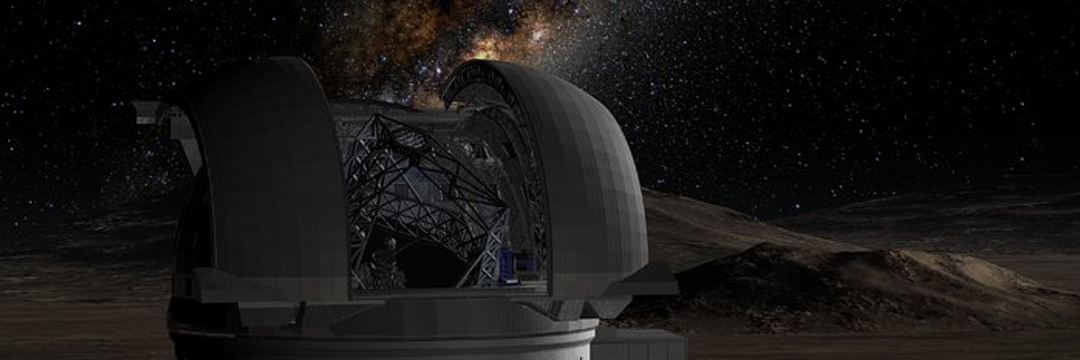
Future observations, such as those from the James Webb Telescope, the Extremely Large Telescope, or advances in gravitational waves, may better test these predictions, verifying details of stellar orbits or subtle signals that differentiate a black hole from a dark matter core.
For now, the proposal opens up an exciting possibility: perhaps the center of our galaxy is dominated not by a matter-devouring black hole, but by a gigantic concentration of dark matter, revealing a deeper connection between the mystery of dark matter and the architecture of the Milky Way.
Published in 02/15/2026 01h19
Text adapted by AI (Grok) and translated via Google API in the English version. Images from public image libraries or credits in the caption. Information about DOI, author and institution can be found in the body of the article.
Reference article:
Original study: