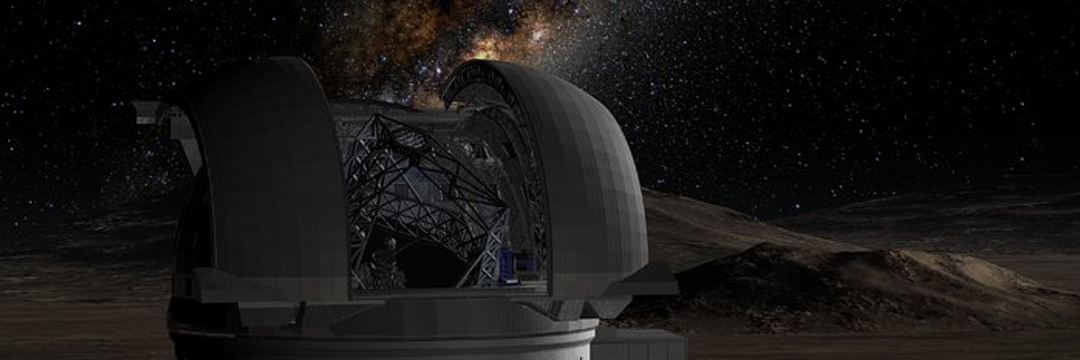


The Vera C Rubin Observatory, located in Chile, is impressing the scientific community even before beginning its main mission.
Using preliminary data collected during initial tests and adjustments, astronomers announced the discovery of more than 11,000 previously unknown asteroids in the Solar System.
This is the largest number of new asteroids identified in a single batch in recent years.
These discoveries came from approximately one million observations made over a month and a half.
Among the new objects are 33 near-Earth asteroids (known as NEOs) and about 380 trans-Neptunian objects (TNOs), which orbit beyond the planet Neptune.
All findings were confirmed by the Minor Planet Center of the International Astronomical Union, responsible for registering and validating new celestial bodies.
The Vera C.
Rubin Observatory was built specifically to conduct the Legacy Survey of Space and Time (LSST), a ten-year survey that will generate approximately 30 petabytes of data.
This ambitious project aims to map the sky in an unprecedented way, catalog the Solar System, study variable stars, supernovae, and even the Milky Way.
The telescope has a large mirror, a gigantic digital camera-the largest ever built-and a wide field of view, allowing it to detect faint, fast-moving objects with up to six times greater sensitivity than most other telescopes used to hunt asteroids.
This extraordinary capability allows the identification of smaller, more distant asteroids that previously went unnoticed.
Scientists developed special software and algorithms to process these enormous volumes of information.
One of the challenges was finding very distant objects amidst millions of light sources flashing across the sky.
As researcher Matthew Holman explained, “looking for a TNO is like looking for a needle in a haystack.” Thanks to new tools created by teams from the University of Washington and the Harvard-Smithsonian Center for Astrophysics, it was possible to analyze billions of data combinations and determine more precise orbits for tens of thousands of asteroids.
Mario Juric, lead scientist on the project at the Rubin Observatory, commented that this first major shipment of discoveries is just “the tip of the iceberg” and shows that the observatory is ready to deliver on its promises.
“What previously took years or decades to discover, Rubin will reveal in a few months,” he said.
Researchers emphasize that, when the main survey begins, the telescope should find the same number of new asteroids every two or three days in the first few years.
These discoveries are of great scientific importance.
They help to better understand how the Solar System formed and evolved, including the movements of the planets in their early stages.
Trans-Neptunian objects, for example, may reveal clues about the existence of a possible ninth planet yet to be discovered.
Near-Earth asteroids are crucial for planetary defense: better understanding their location and orbit allows us to monitor potential collision threats with our planet.
Fortunately, none of the newly discovered objects pose a risk to Earth.
In addition to the 11,000 new asteroids, the preliminary data also allowed for refining the orbits of more than 80,000 already known asteroids, including some that had been “lost” due to insufficient observations.
Visualizations created with this data show the new bodies in light tones highlighted against the known ones, helping to visualize their distribution in the inner Solar System.
The Vera C.
Rubin Observatory represents a huge advance in modern astronomy.
With its ability to scan the sky quickly and deeply, it will triple the total number of known asteroids and increase the count of objects beyond Neptune by almost ten times.
All of this opens doors to discoveries we haven’t even imagined yet.
For now, these initial results serve as a sample of what is to come.
Scientists continue to adjust the equipment and refine the analysis programs.
When the LSST truly begins, the night sky will never be the same again.
Thousands of new worlds will be revealed regularly, enriching our knowledge of our place in the Universe.
Published in 04/23/2026 00h26
Text adapted by AI (Grok) and translated via Google API in the English version. Images from public image libraries or credits in the caption. Information about DOI, author and institution can be found in the body of the article.
Reference article: