

doi.org/10.3847/2041-8213/ae4b3b
Credibility: 989
#Exoplanet
Astronomers have just made a fascinating discovery: they observed two giant planets in the process of forming around a young star, creating a system that looks surprisingly like what our Solar System must have been like billions of years ago
The star, called WISPIT 2 (or WASP-193 in some references), is about 437 light-years from Earth.
It is still a “baby” in the cosmos, surrounded by a huge disk of gas and dust – the same type of environment where the planets of our Solar System were born more than 4.5 billion years ago.
Within this disk, scientists have identified two giant gas planets that are actively growing.
They are opening gaps, rings, and clear patterns in the material around them, just as Jupiter and Saturn likely did when our Solar System was still forming.
This structure suggests that the two worlds are shaping the disk in a way similar to that which gave rise to the gas giants of our system.
This is only the second time in history that astronomers have been able to directly observe multiple planets forming simultaneously around a star.
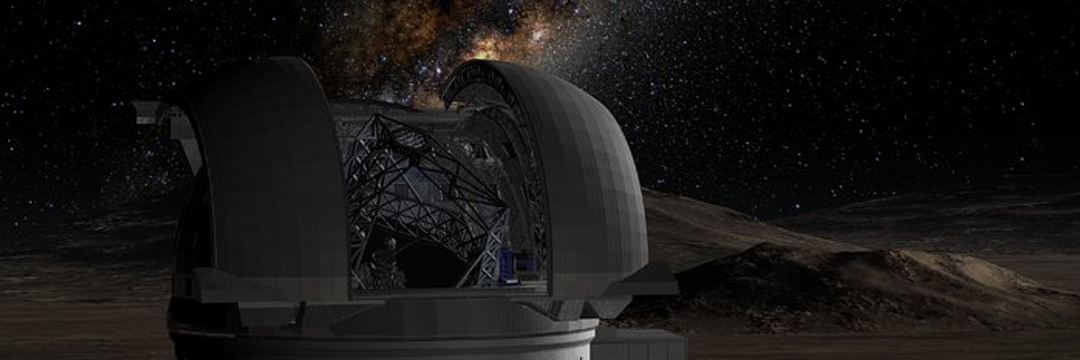
The observation was made possible thanks to the advanced instruments of the European Southern Observatory (ESO), and the study was published in The Astrophysical Journal Letters.
For researchers, the WISPIT 2 system functions as a true time capsule.
It offers a rare “glimpse into our own past,” allowing for a better understanding of how giant planets form and how they influence the development of an entire planetary system.
One scientist even said that “WISPIT 2 is the best glimpse we have to date of the past of our Solar System.”
This discovery helps science answer long-standing questions about planetary formation and shows that the process that created Earth, Jupiter, Saturn, and the other planets may be more common than we imagined in the Universe.
It’s like watching, in real time, the birth of a solar system similar to our own.
Published in 03/28/2026 00h17
Text adapted by AI (Grok) and translated via Google API in the English version. Images from public image libraries or credits in the caption. Information about DOI, author and institution can be found in the body of the article.
Reference article:
Original study: