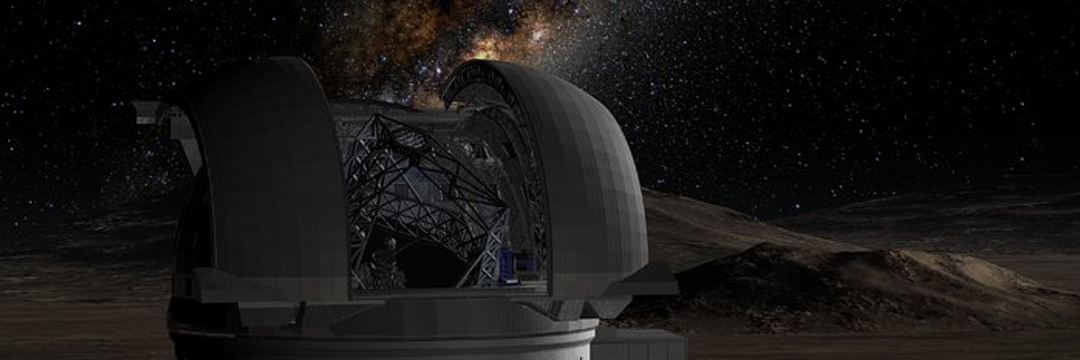



Imagine a summer night in 1977 at an observatory in the United States
A radio telescope called Big Ear picks up, for just 72 seconds, a radio signal so strong and peculiar that an astronomer, upon seeing the data printed on paper, circles the sequence of letters and numbers and writes a single word next to it: “Wow!”.
Almost half a century later, that moment remains one of the greatest mysteries of modern astronomy.
What exactly was the Wow! Signal trying to tell us-or was it just a trick of the cosmos?
The signal came from the direction of the constellation Sagittarius and presented characteristics that made it unique.
Its intensity was exceptionally high compared to the background noise of space, eliminating the possibility of it being just a random fluctuation.
Even more intriguing: it appeared exactly at the frequency of 1420 MHz, known as the emission line of neutral hydrogen.
This frequency is considered a kind of “universal address” in the cosmos, since hydrogen is the most abundant element in the universe and its spectral signature is the same everywhere.
Any advanced civilization that wanted to communicate interstellar would probably choose this frequency, since it is relatively quiet and easily recognizable.
Furthermore, the signal had a very narrow bandwidth-only 10 kHz-something typical of focused artificial transmissions and not natural sources, which usually emit in much wider bands.
And it lasted exactly the time expected for a fixed source in the sky to be swept by the telescope’s beam due to the Earth’s rotation, forming a smooth bell-shaped curve.
All this together seemed too perfect to be a coincidence.
However, Big Ear had no capacity to store the signal for later analysis, nor to detect modulations that could carry a coded message.
And worst of all: the signal never repeated itself.
Over the years, several explanations have been proposed.
Some astronomers have suggested comets releasing ionized hydrogen, while others have pointed to rare astrophysical phenomena such as fast radio bursts or even reflections from distant sources.
Recent statistical studies show that the probability of such a unique event being purely random is not negligible, but it is also not high enough to completely rule out other origins.
What remains is the frustration: without repetition, science cannot confirm anything.
As Carl Sagan said, extraordinary claims require extraordinary evidence-and the Wow! Signal remains, to this day, without a definitive explanation.
Decades later, in 2019, another signal reignited the debate.
Called BLC1 (Breakthrough Listen Candidate 1), it was captured by the Parkes radio telescope in Australia, in the direction of the nearest star to the Sun: Proxima Centauri, just 4.2 light-years away.
Breakthrough Listen, one of the largest extraterrestrial intelligence search projects ever undertaken, analyzed thousands of hours of data and identified this candidate that passed through several filters of terrestrial interference.
The signal exhibited low-frequency modulation, tone variation similar to human radar, and a Doppler shift indicating relative motion consistent with a source not linked to Earth.
The excitement was enormous.
Proxima Centauri is a small, cool red dwarf, but it orbits planets-including Proxima b, a rocky world in the habitable zone, where liquid water could theoretically exist on the surface.
If the signal were artificial, it would be coming from our nearest cosmic neighbor.
However, after years of meticulous analysis, the team concluded, with very high confidence, that BLC1 was local interference-likely generated by terrestrial equipment near the telescope.
Another hope dashed.
These episodes show how challenging the search for extraterrestrial life is.
Red dwarfs like Proxima Centauri are the most common stars in the galaxy and live for trillions of years, offering ample time for life to emerge and evolve.
But they are also extremely active: they emit violent flares that can sterilize nearby planets, strip away atmospheres, and prevent the formation of stable conditions.
Planets in the habitable zone of these stars tend to be locked in synchronous rotation, with one side always facing the star (hot and arid) and the other plunged into eternal darkness (icy).
Life, if it exists, might be concentrated in the twilight zone of the terminator, where temperatures would be milder-but even that is speculative.
Meanwhile, the Alpha Centauri system, Proxima’s neighbor, presents other enigmas.
Its two main stars, A and B, are more like the Sun, but orbit each other in an elliptical ballet that would make the habitability of planets around them quite complicated.
Even so, they remain priority targets for observation.
Today, with telescopes like James Webb and missions like Gaia mapping billions of stars, the search gains new tools.
Perhaps we will never detect an explicit “hello” from another civilization.Perhaps the signals we seek are subtle, rare, or simply lost in the immense noise of the universe.
But each discarded candidate teaches us something new about how the cosmos works-and about how to refine our listening.
The Wow! Signal and BLC1 may not have been alien messages, but they remind us of a profound truth: we are, in fact, listening.
And the silence of the universe, for now, remains one of the most fascinating questions humanity has ever asked itself.
Who knows what will come in the next scan of the sky”
? Rare Earth (@rareearth0) February 17, 2026
The enigma of signals that could change our view of the Universe#WowSignal
Imagine a summer night in 1977 at an observatory in the United States. A radio telescope called Big Ear picks up, for just 72 seconds, a radio signal strong and peculiar: The “Wow!” Signal. pic.twitter.com/9donggagNl
Published in 02/17/2026 08h26
Text adapted by AI (Grok) and translated via Google API in the English version. Images from public image libraries or credits in the caption. Information about DOI, author and institution can be found in the body of the article.
Reference article: