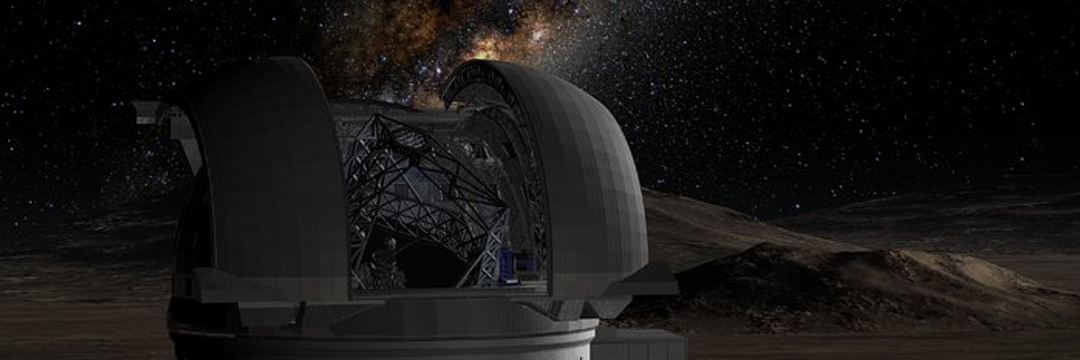


The age of the universe is one of the most fascinating questions in modern cosmology
According to the widely accepted standard model, based on the Big Bang, our cosmos is about 13.8 billion years old.
This number seems solid and is calculated with great precision from various observations, such as the cosmic microwave background radiation, the expansion of galaxies, and other indicators.
But are we right?
In special relativity, there is no absolute universal clock: time and distances depend on the frame of reference of each observer.
However, general relativity, which describes gravity and the large-scale structure of the universe, allows us to define a kind of shared “cosmic clock.” This is thanks to the FLRW model, which considers the universe to be expanding, with matter and energy moving in a way that breaks the symmetry between past and future.
The universe was denser, hotter, and more compact in the past and has been expanding and cooling ever since.
This shared history allows all observers to calculate a consistent age for the cosmos, even without an absolute time in the Newtonian sense.
Despite this confidence, some recent observations, especially from the James Webb Space Telescope, have raised questions.
Very distant and ancient galaxies appear more mature and formed than expected for such a “young” universe, reigniting debates about whether cosmic time might be longer than we estimate.
An alternative idea that resurfaces in these debates is the tired light theory, proposed almost a century ago by Fritz Zwicky.
Instead of interpreting the redshift of distant galaxies as a sign that they are moving away from us due to the expansion of space, this hypothesis suggests that photons gradually lose energy along very long trajectories.
This loss would cause the light to appear “redder” without the universe needing to be expanding.
If the tired light theory were correct, or at least partially contributed to the observed redshift, the actual expansion of the universe would be slower than we think.
Consequently, it would take longer for the cosmos to reach the current state we observe today.
This could resolve some recent tensions, such as discrepancies in the expansion rate (the famous “Hubble tension”) and the apparent existence of very complex structures in very remote epochs.
Although attractive for explaining certain anomalies, the tired light theory faces serious difficulties.
Observations of distant supernovae show time dilation in their light curves, something expected in expansion, but difficult to explain solely with the energy loss of photons.
Furthermore, the cosmic microwave background radiation, with its perfect thermal spectrum and small fluctuations, is very well explained by the Big Bang and expansion model, but would require complex adjustments to the tired light scenario.
Most cosmologists consider the actual expansion of space the most robust and consistent explanation with the body of evidence.
Still, discussions like these show that science is alive.
New measurements, especially with powerful instruments like the James Webb, continue to challenge our ideas and force us to test the limits of what we believe we know.
Perhaps the universe is a little older than the current 13.8 billion years-or perhaps the explanations lie in subtle adjustments within the standard model.
The important thing is that we continue observing, calculating, and questioning, because that is how understanding advances.
? Rare Earth (@rareearth0) February 5, 2026
Is the universe older than we think?#universe
The age of the universe is one of the most fascinating questions in modern cosmology pic.twitter.com/BveMbfcyCz
Published in 02/05/2026 12h53
Text adapted by AI (Grok) and translated via Google API in the English version. Images from public image libraries or credits in the caption. Information about DOI, author and institution can be found in the body of the article.
Reference article: