

doi.org/10.48550/arXiv.2511.03625
Credibility: 888
#Exomoons
To date, we don’t know of any moons orbiting exoplanets in other solar systems, the so-called exomoons
There are some candidates, but none have been officially confirmed.
However, it’s difficult to imagine that they don’t exist, since moons are common in our Solar System.
It would be very strange if they weren’t present elsewhere in the universe.
Among the moons in our Solar System, Earth’s Moon is special.
It is large relative to our planet and plays an important role in keeping Earth habitable.
The Moon stabilizes the tilt of Earth’s axis, which helps create a climate and seasons more favorable to life.
Furthermore, it generates tides in the oceans, which make coastal regions rich in biodiversity.
But do rocky planets in the habitable zone of other stars also have exomoons? Could these moons help create conditions for life? These questions are the focus of a new study titled “Tide-Torn: Why the Most Common Stars May Not Have Large Moons in the Habitable Zone.” The work, led by Shaan Patel of the Department of Physics at the University of Texas at Arlington, will be published in The Astronomical Journal and is available on the website arxiv.org.
Red dwarfs, or M stars, are the most common type of star in the Milky Way and frequently harbor rocky planets in their habitable zones, regions where conditions may allow for the existence of liquid water.
However, these stars are small and less bright than the Sun, meaning their habitable zones are closer to the star.
This causes planets in these zones to often be tidally locked, with one side always facing the star.
Researchers wanted to understand if rocky planets in these conditions could support moons similar to our Moon.
To do this, they performed computer simulations, called N-body simulations, which analyze the interactions between stars, planets, and moons.
They varied the mass of the planets and the distance at which they orbit their stars, investigating when an exomoon would become unstable.
This instability is linked to the planet’s Hill sphere, a region where the planet’s gravity dominates and keeps the moon in orbit.
The larger the Hill sphere, the longer it takes for a moon to escape, which makes intuitive sense.
The results show that it is very difficult for large exomoons to survive in these systems.
“Our findings suggest that Earth-like planets in the habitable zone of red dwarfs lose large moons, like our Moon, within the first billion years of their existence, if they ever formed them,” the authors explain.
The type of red dwarf influences the outcome.
There are 10 classifications, from M0 to M9, based on the star’s temperature, which affects the location of the habitable zone and, consequently, the strength of stellar tides on moons.
For example, simulations of 200 million years of a system with a planet in the habitable zone of an M4 red dwarf showed that the lifespan of a moon is, on average, less than 10 million years – a very short time on astrobiological, geological, or astrophysical scales.
For cooler red dwarfs, from M5 to M9, moons would disappear even faster.
Previous research already indicated that large moons in red dwarf systems suffer extreme heating due to tides, which would make them uninhabitable.
“Along with our findings, this points to a general fragility of exomoons in red dwarf systems,” say the authors.
Despite this, there are rare cases where a large moon could survive longer.
“A large moon can last up to 1 billion years if it orbits a planet with a mass similar to Earth’s around an M0 red dwarf,” the researchers explain.
In this case, the habitable zone is farther from the star, which reduces the influence of stellar tides on the planet and allows the moon to play a greater role in stabilizing the planet’s rotation.
In a scenario with a planet of two Earth masses, the moon could last up to 1.35 billion years – a period that, for reference, coincides with the time when oxygen began to accumulate in Earth’s atmosphere.
The authors acknowledge that, in extremely rare cases, an exomoon could persist for more than 5 billion years.
Furthermore, very small moons, such as Ceres or Phobos, could survive for long periods, but are too small to be detected with current technology.
The detection of exomoons may receive a boost in the future with the Habitable Worlds Observatory, a project still in the planning stages that will aim to find Earth-like exoplanets.
With a 6-8 meter mirror, it could also detect exomoons in some cases.
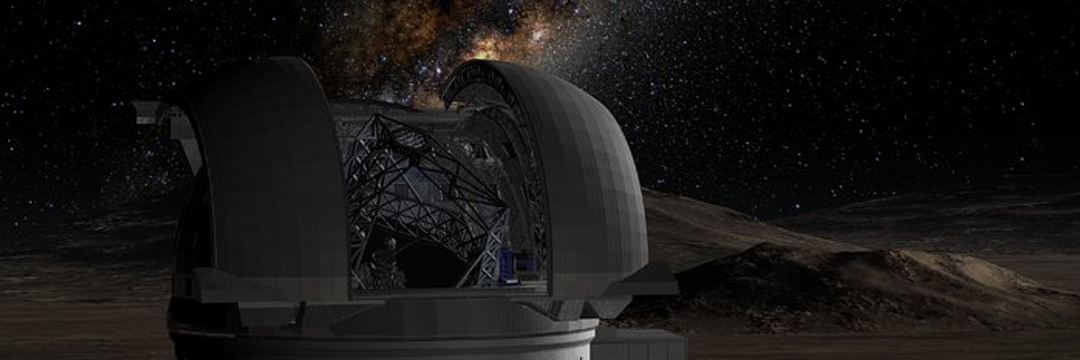
Another advance may come from the Giant Magellan Telescope, which is expected to begin operating in the 2030s with a 24.5-meter composite mirror capable of obtaining direct images of exoplanets and possibly exomoons.
The study focused on red dwarfs because they are the most common stars and host many rocky planets. However, in other types of stars, where the habitable zone is further away, it is possible for planets to maintain exomoons for billions of years. These moons could help make their planets habitable, as our Moon does with Earth, or even be habitable themselves, as we suspect some icy ocean moons in our Solar System. There is still much to discover about the possibilities of life in other star systems.
Published in 11/10/2025 09h21
Text adapted by AI (Grok) and translated via Google API in the English version. Images from public image libraries or credits in the caption. Information about DOI, author and institution can be found in the body of the article.
Reference article:
Original study: