


doi.org/10.48550/arXiv.2507.13409
Credibility: 889
#3i/AtlasÂ
Detailed photos taken by the newly opened Vera C Rubin Observatory show that the recently discovered interstellar object 3I/ATLAS is about 11 kilometers wide, making it the largest object of its kind ever observed.
Comet 3I/ATLAS, which originates from outside our solar system, was identified on July 1st, traveling toward the Sun at a staggering speed of over 210,000 km/h.
Less than 24 hours later, NASA confirmed that it is the third known interstellar object-a fragment of another star system passing through our own.
Analyses indicate that it is a comet and may be up to 3 billion years older than Earth, possibly making it the oldest comet ever detected.
Until now, scientists only knew that the comet’s coma-the cloud of ice, dust, and gas surrounding it-was up to 15 miles (24 km) in diameter.
But the size of the nucleus, the solid part of the comet, was still a mystery.
A new study, published July 17 on the arXiv server, brought together more than 200 researchers who analyzed images of the comet captured by the Vera C.
Rubin Observatory even before its official discovery.
These images, taken on June 21, show that the comet’s nucleus is about 2.2 miles (3.5 km) in radius, or approximately 7 miles (11 km) in diameter, with a margin of error of about 0.7 km.

Before 3I/ATLAS, only two other interstellar objects had been confirmed: the asteroid 1I/’Oumuamua, discovered in 2017, measuring about 400 meters across, and the comet 2I/Borisov, seen in 2019, with a nucleus measuring about 1 kilometer.
This makes 3I/ATLAS the largest interstellar object ever recorded.
The new images also allowed us to study the comet’s coma, revealing large amounts of dust and water ice surrounding the nucleus.
This data confirms that 3I/ATLAS is indeed a natural comet, and not a disguised alien probe, as some controversial theories have recently suggested.

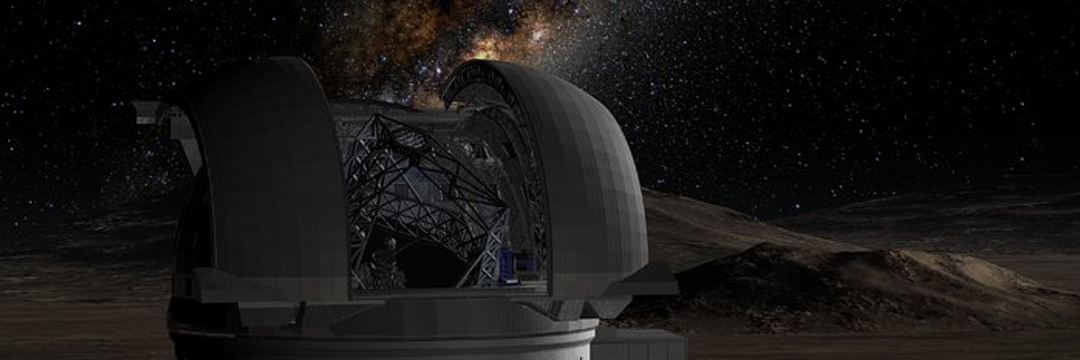
Located in the Chilean Andes, the Vera C.
Rubin Observatory boasts the world’s largest digital camera and is about to begin a 10-year mission to map the Southern Hemisphere sky, called the Legacy Survey of Space and Time (LSST).
The telescope’s first images, released in June, have already revealed more than 10 million galaxies in never-before-seen detail and discovered thousands of new asteroids.
The fact that the observatory captured images of 3I/ATLAS 10 days before its official discovery demonstrates the telescope’s revolutionary potential.
Experts believe that in the next 10 years, it could identify up to 50 new interstellar objects, transforming our understanding of these visitors from other star systems.
Published in 07/27/2025 09h25
Text adapted by AI (Grok) and translated via Google API in the English version. Images from public image libraries or credits in the caption. Information about DOI, author and institution can be found in the body of the article.
Reference article:
Original study: