

doi.org/10.1038/s41550-026-02850-5
Credibility: 989
#3I/ATLAS
A comet that passed close to Earth last year, originating from another star, likely originated in a very cold and isolated region of the galaxy, even before any solar system formed there
This is the conclusion of astronomers who carefully studied the object and recently published their results.
Comet 3I/ATLAS is only the third confirmed interstellar visitor to enter our Solar System.
It may also be the oldest of all: scientists estimate it to be up to 11 billion years old, more than twice the age of our Sun.
This makes it a kind of cosmic time capsule, bringing precious information about the conditions of the Universe billions of years ago.
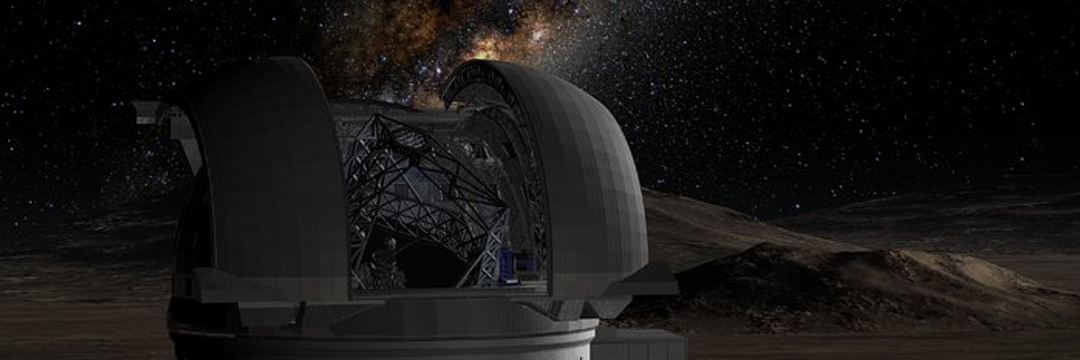
A team from the University of Michigan observed the comet last fall using the powerful ALMA telescope in the Atacama Desert, Chile.
The object was discovered the previous summer, giving NASA and the European Space Agency enough time to point several space telescopes at it.
The comet passed close to Mars in October and made its closest approach to Earth in December.
Today, it is well beyond Jupiter, continuing its journey out of our Solar System, visible only with professional equipment.
What most caught the researchers’ attention was the composition of the water in the comet.
They found an extremely high amount of deuterium, also called heavy hydrogen.
This form of hydrogen is much rarer in our Solar System.
The high presence of deuterium indicates that the comet formed in a much colder environment than ours, probably even before the star of its home system was born.
Astronomer Teresa Paneque-Carreno, from the University of Michigan, explains that while our Sun formed surrounded by other young stars, the star of origin of this comet may have been more solitary.
This resulted in less heat and even lower temperatures, favoring the preservation of molecules such as semi-heavy water (HDO).
In fact, comet 3I/ATLAS contains more than 30 times the amount of this deuterated water found in Earth’s oceans.
The exact place it came from is still unknown, but the data helps to piece together a larger puzzle.
Understanding the origin of this comet could reveal what the conditions were like for planet formation in the early days of the galaxy.
The comet’s nucleus is between 440 meters and 5.6 kilometers in diameter, according to observations from the Hubble Telescope, and it travels at an impressive 220,000 km/h.
To provide context, the first known interstellar object was Oumuamua, discovered in 2017 by a telescope in Hawaii.
Two years later, in 2019, came comet 2I/Borisov, found by an amateur astronomer in Crimea.
3I/ATLAS is the most recent addition to this rare and valuable list.
These visitors from other star systems are incredible opportunities for science.
They carry material that never went through the formation process of our own Solar System and, therefore, help us to better understand the history of the Milky Way and the different ways stars and planets can arise in the Universe.
The study, published in the journal Nature Astronomy, opens new doors to understanding our place in the cosmos.
This discovery reinforces the idea that the Universe is vast and diverse, with places where conditions are completely different from those we know here.
Comet 3I/ATLAS, now following its solitary path, continues to teach us even as it moves away forever.
Published in 04/26/2026 08h09
Text adapted by AI (Grok) and translated via Google API in the English version. Images from public image libraries or credits in the caption. Information about DOI, author and institution can be found in the body of the article.
Reference article:
Original study: