

doi.org/10.1038/s41550-026-02775-z
Credibility: 989
#Life
A new scientific study reveals an important fact: the presence of water alone is not enough to make a planet habitable
There is a “hidden” chemical ingredient that makes all the difference-and Earth got this delicate combination almost right.
It all happens at the very beginning of the formation of a rocky planet, when the metallic core separates from the mantle.
In this crucial phase, the amount of oxygen present in the planet’s material determines the fate of two elements fundamental to life: phosphorus and nitrogen.
Phosphorus is a key component of DNA, RNA, and the system that cells use to store and release energy (the famous ATP).
Nitrogen is indispensable for building proteins, that is, the “machines” that do practically everything inside living beings.
When there is very little oxygen during the formation of the core, phosphorus binds strongly to heavy metals and ends up sinking along with the core, becoming trapped down there, inaccessible to the chemistry of the surface.
When there is too much oxygen, nitrogen transforms into gaseous forms that easily escape into space, leaving the planet very poor in this element.
Scientists have discovered, through detailed computer models, that there is an extremely narrow band-a kind of “ideal chemical zone”-where the amount of oxygen is exactly right.
In this delicate window, neither does phosphorus sink too far into the core, nor does all the nitrogen escape into space.
Both elements remain in sufficient quantities in the mantle and, later, in the crust and oceans, available for the chemistry of life to emerge and evolve.
Earth fell exactly within this narrow band.
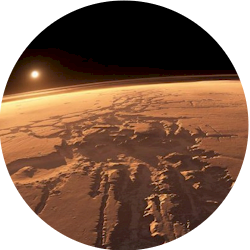
Mars, on the other hand, was not so lucky: its environment was more oxidizing, which caused a good portion of the nitrogen to be lost, while phosphorus remained more retained on the surface.
The result is a planet with water in the past, but with a chemistry too unbalanced to allow the emergence of life as we know it.
This discovery significantly changes how scientists think about habitability on other planets.
Searching only for worlds with liquid water is not enough.
It is also necessary that the planet had the right chemical conditions at the time of core formation-and this depends heavily on the chemical composition of the star around which the planet formed.
In short: life requires more than just water.
It demands a very precise chemical balance, which Earth achieved by a surprisingly small margin.
This “detail” of oxygen at the right time may be the true filter that separates planets that only have water from planets that can actually support life.
Published in 02/12/2026 02h19
Text adapted by AI (Grok) and translated via Google API in the English version. Images from public image libraries or credits in the caption. Information about DOI, author and institution can be found in the body of the article.
Reference article:
Original study: